

Tick season in Europe now effectively runs year-round in milder regions, with peak activity from spring through autumn. For dog and cat owners, this raises a recurring question: what actually works, and what's the right combination of methods? This guide compares the main approaches — herbal/supplementation-based methods, ultrasonic repellents, and topical treatments — with honest assessments of where each fits.
Understanding the Threat: Why Tick Protection Matters
Ticks transmit a range of diseases to dogs and cats, including Lyme disease (Borrelia burgdorferi), anaplasmosis, babesiosis, and ehrlichiosis. The risk depends on geographic location, the time of year, and how much time your pet spends outdoors in wooded or grassy areas. In parts of central and northern Europe, tick populations have been expanding both in numbers and in the length of their active season. Waiting until spring to think about protection is increasingly not enough.
No single method provides 100% protection. The most effective approach for most pets combines a method that reduces tick attachment with one that supports the pet's overall resilience — and consistent post-walk tick checks regardless.
Herbal and Plant-Based Approaches
Cistus (Cistus incanus) — What the Evidence Actually Says
Cistus incanus, the pink rock rose, has become widely discussed in the context of natural tick repellence. The plant is rich in polyphenols, and the hypothesis is that regular consumption changes the scent profile of the animal's skin secretions, making it less attractive to ticks. Anecdotal reports from dog owners are numerous, and some preliminary research supports the anti-parasitic properties of cistus extracts. However, it's important to be clear: cistus is not a proven standalone tick preventative. It should be understood as a supportive measure — one that may reduce tick burden when combined with other protection — rather than a complete solution.
Cistus is typically given as a brewed tea (added to water or food), a dried herb mixed into meals, or in concentrated supplement form. If using it for a pet, always source products formulated or tested for animal use, and consult your vet for appropriate dosing by weight.
Geranium Oil-Based Spot-On Treatments
A more tangible natural option is the Pess Bio Spot-On, which uses geranium oil (a natural acaricide) combined with dimethicone as a physical barrier. This is applied directly to the skin between the shoulder blades — the same application method as conventional spot-on treatments — and provides a chemical-free approach to repelling ticks and fleas. It's formulated for medium and large dogs (10–20 kg). For owners who specifically want to avoid synthetic pesticides, this is one of the few topical options with a defined natural active ingredient.
Ultrasonic Tick Repellents
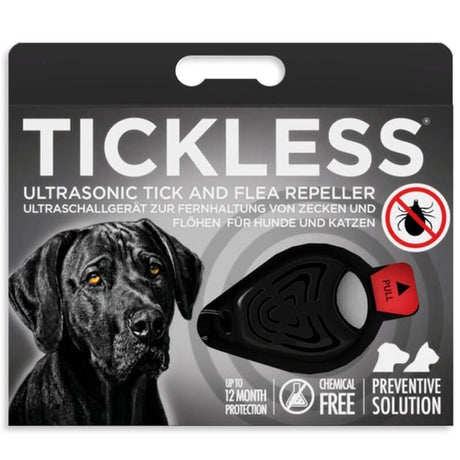
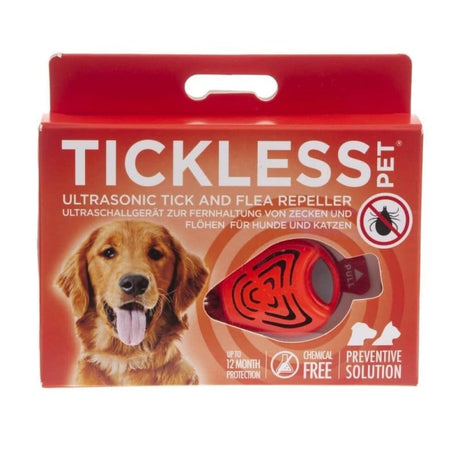
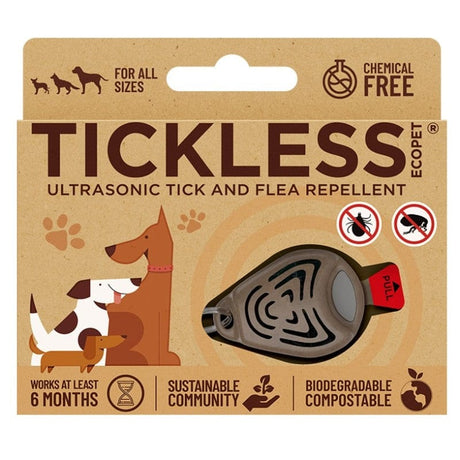
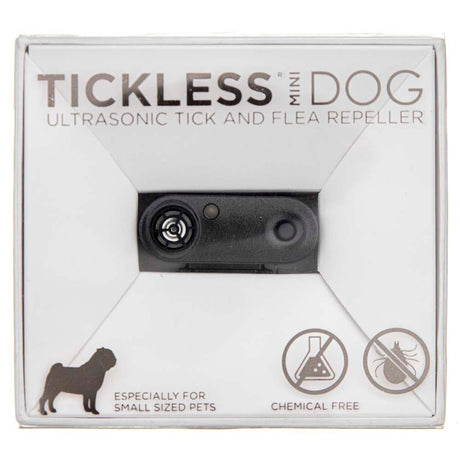
Tickless devices use ultrasonic waves to disorient ticks and disrupt their ability to locate a host. They require no chemicals, no application, and no regular replacement — just a battery change every few months. The Tickless Pet range attaches directly to the collar and is available in several colour variants. The Tickless Pet Mini is a more compact option for smaller dogs.
Ultrasonic repellents are well-suited to owners looking for a completely chemical-free approach, for pets with skin sensitivities that preclude conventional spot-on treatments, or as a layer of protection in addition to other methods. The evidence base is more limited than for chemical treatments, and they work best in combination with other measures rather than as a sole defence.
Supporting Your Pet's Health Year-Round
Beyond direct tick prevention, a pet's overall health and immune resilience affects how their body responds to parasite exposure and to any infections that might occur. A few supplements worth knowing about:
Omega-3 fish and salmon oils — Pokusa and Pifpaw both offer human-grade fish and salmon oils specifically formulated for pets. Omega-3 fatty acids support skin and coat health, reduce inflammation, and contribute to immune function. Healthy skin is also a more effective physical barrier. Atlantic Treat Salmon Oil is a 100% pure option suitable for both dogs and cats.
Multivitamins for dogs and cats — Pokusa GreenLine MultiVit Dog and MultiVit Cat provide a broad daily micronutrient baseline that supports overall health through the tick season and beyond.
Calming support — For pets that become anxious or stressed (which can affect immune function), Pokusa GreenLine NoStress Calming Tablets offer a natural approach to supporting nervous system balance.






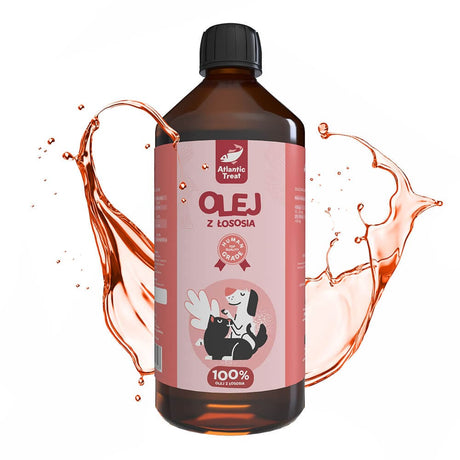


Atlantic Treat
Atlantic Treat Salmon Oil 100% for Dog and Cat - 1000 ml
Regular price €10.69Unit price€10.69 /L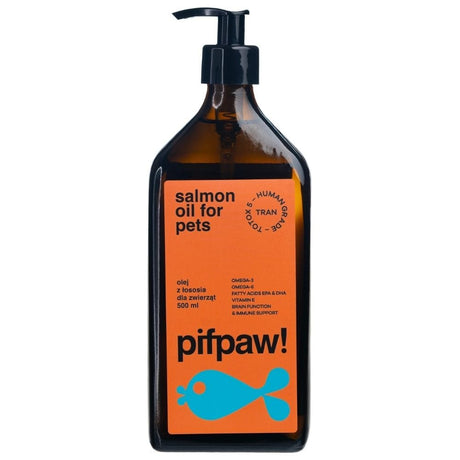


Pokusa for Health
Pokusa GreenLine MultiVit Dog - 120 Tablets
Regular price €8.79Unit price€0.07 each
Pokusa for Health
Pokusa GreenLine MultiVit Cat - 300 Tablets
Regular price €8.09Unit price€0.03 each


Pokusa for Health
Pokusa GreenLine NoStress Calming Tablets - 60 Tablets
Regular price €9.59Unit price€0.16 each


After the Walk: Tick Checks Are Non-Negotiable
No repellent or preventive measure eliminates tick attachment entirely. After every walk in wooded, grassy, or scrubland areas, check your pet thoroughly — especially around the head, neck, ears, armpits, groin, and between the toes. Ticks should be removed promptly with a proper tick removal tool, gripping as close to the skin as possible and pulling straight out without twisting. The sooner a tick is removed after attachment, the lower the risk of disease transmission.
For the complete range of pet health products available at Medpak, visit our pet supplements collection and our full pet range.
This article is for information only and does not replace medical advice. If you have health concerns, are pregnant, breastfeeding or taking medication, consult a doctor or pharmacist. Dietary supplements are not a substitute for a varied diet.


